What should a modern medical website include?
A modern medical website is not simply an online business card.
For many patients, it is the first point of contact with a healthcare professional and directly shapes their perception of credibility, professionalism and trust.
At the same time, it should provide accurate information, present services clearly and guide visitors toward the next action, whether that means looking for more information or getting in touch and booking an appointment.
1. How should the doctor and their professional profile be presented?
One of the first things visitors should understand is who is behind the website.
The biography, studies, specialty, further training, professional experience and scientific activities should be presented in a clear and organized way.
A proper presentation of the professional profile helps visitors immediately understand the doctor’s expertise and is an important element in building trust.
In practice:
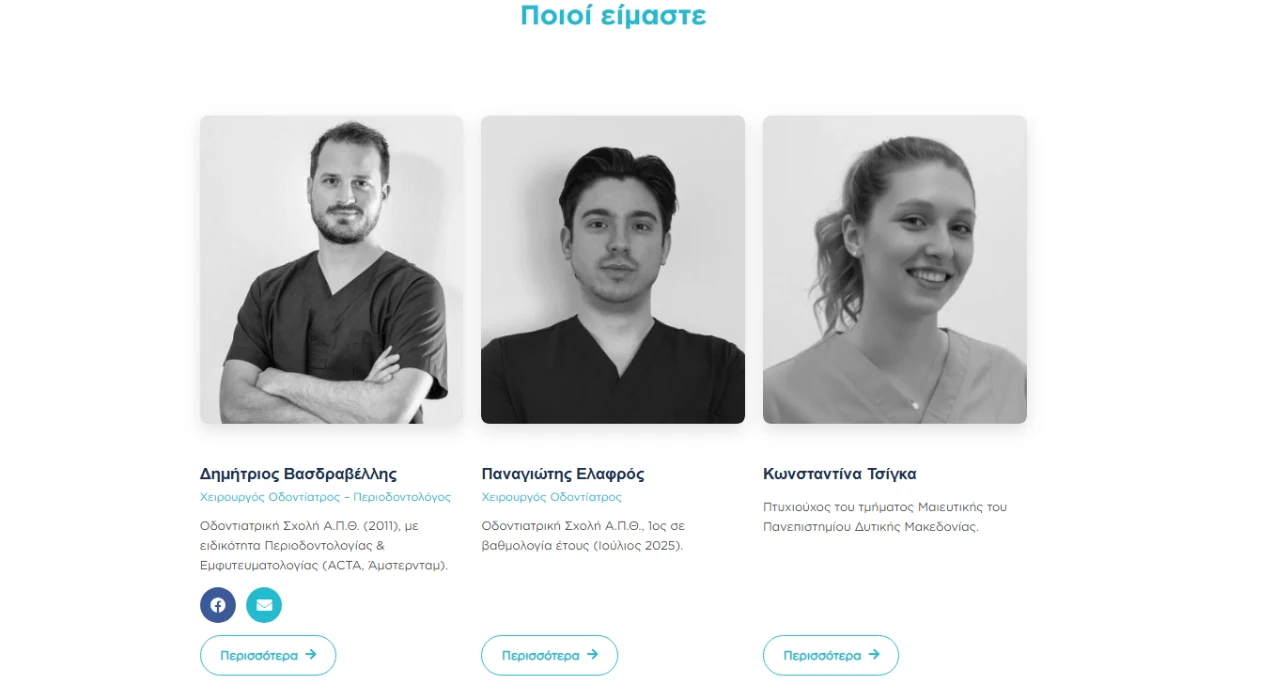
On perio-vasdravellis.gr we have integrated separate biographies for each team member,, allowing visitors to quickly learn about each person’s scientific background and specialty. Under each profile there is a “More” dropdown, which displays additional information and a more detailed biography without overloading the page with excessive content.
2. Why are detailed service and condition pages necessary?
A general “Services” page is often not enough.
Core treatments and services are better given their own dedicated pages, where visitors can find detailed information about the procedure, its benefits and what they can expect.
This is particularly important in specialties that include a large number of different treatments, as it allows users to reach the information that is truly relevant to them more quickly.
In practice:
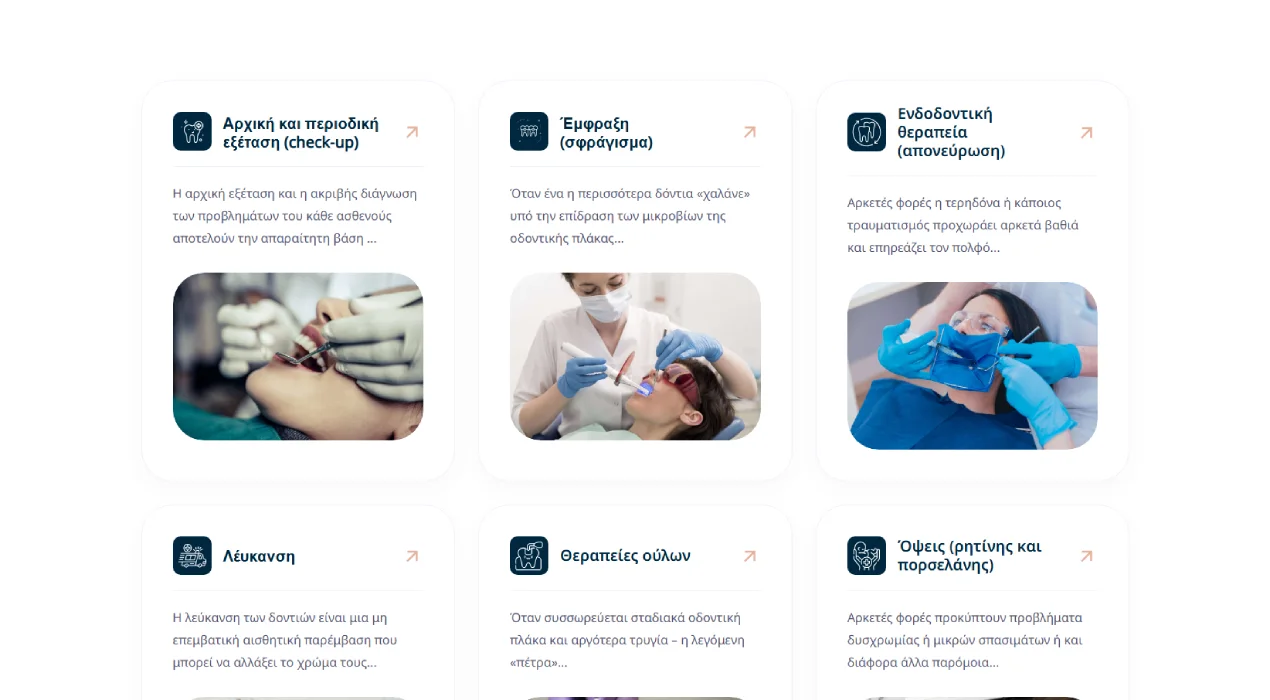
For The Smile Lab, we have developed separate pages for different dental services and treatments. This allows visitors to go directly to the treatment they are interested in and find all the relevant information in one place.
3. Why is a scientific blog with informative content important?
An up-to-date blog can be an important tool for informing the audience and building a relationship with it.
Many users initially search for answers to questions about their mental or physical health rather than for a specific professional.
Through articles that answer real questions, the website can serve as a reliable source of information and provide genuine value to visitors.
In practice:
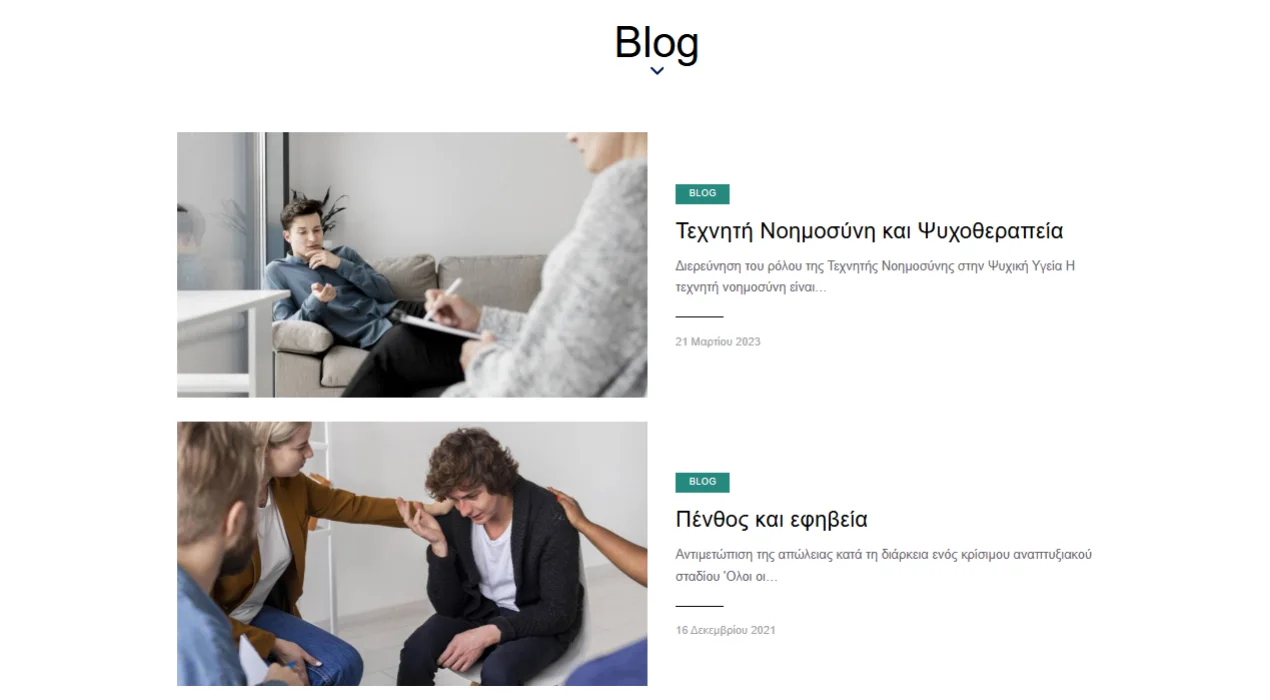
On Psychometria.gr, we have developed informative content around psychometrics and psychometric tools, so that the website functions not only as a presentation of services, but also as a source of useful and reliable information for visitors.
4. How can appointment booking be made easier?
Visitors should not have to search for how to contact the practice.
A prominent appointment Call to Action can appear in different areas of the website and lead to a simple and clear contact process.
The shorter the path between a visitor’s interest and actually booking an appointment, the more effectively the website performs.
In practice:
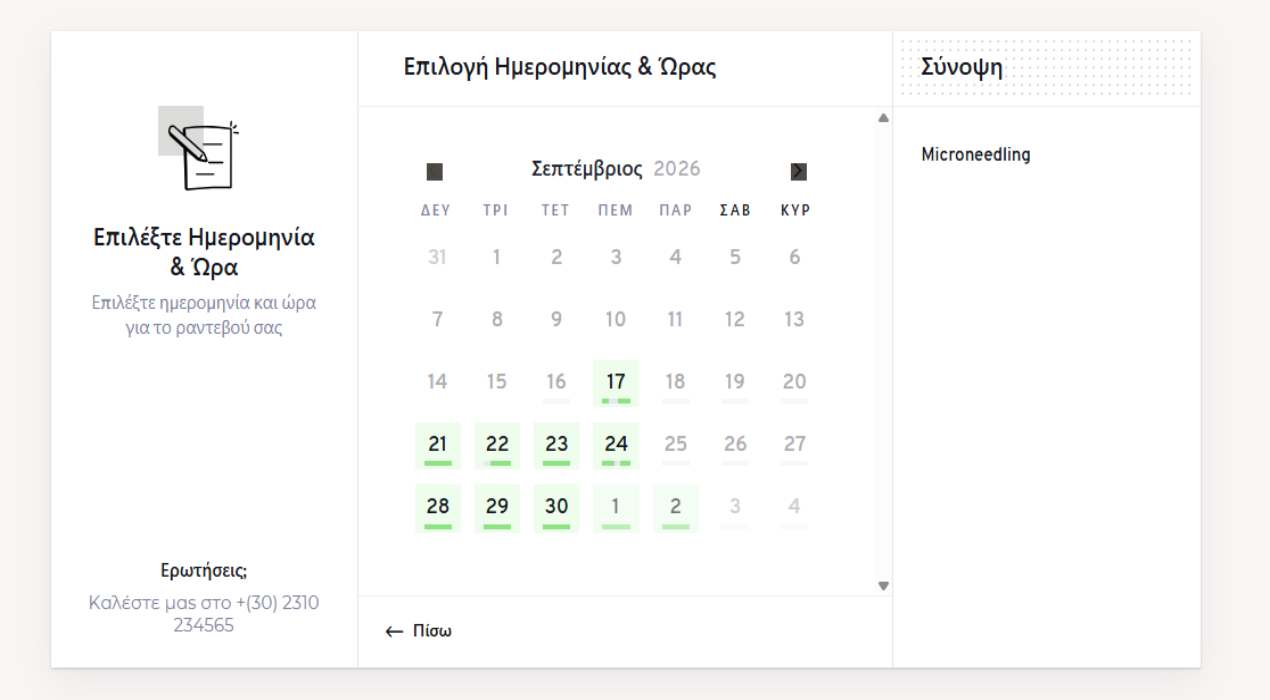
On gkotsikas.gr, we have integrated a prominent Online Appointment option, allowing visitors to move easily from learning about a treatment to the next step of getting in touch.
The appointment system also syncs with Google Calendar, making it easier to organize and manage scheduled appointments.
5. How do Frequently Asked Questions help before an appointment?
A new patient often has several questions before deciding to make contact.
A well-organized FAQ section can provide answers about the process, how a session is conducted, its duration and other practical matters.
This reduces uncertainty for visitors and gives them a clearer idea of what they can expect.
In practice:
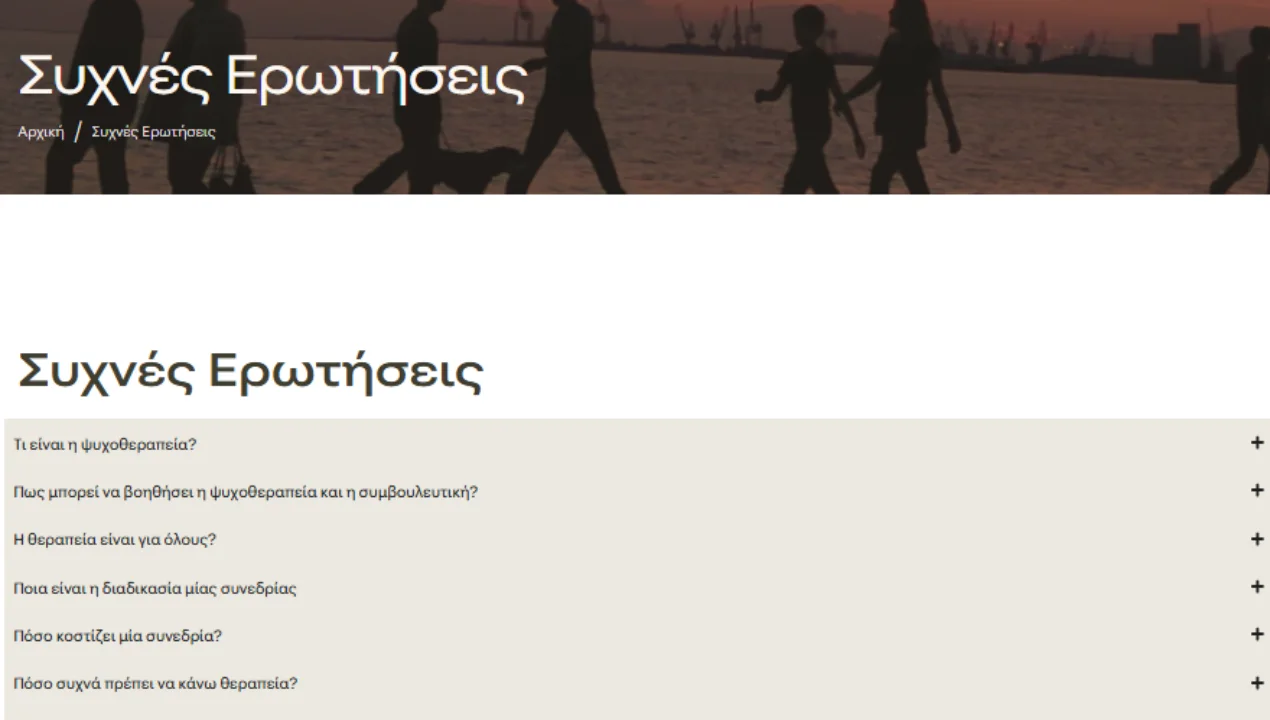
On lenatheodosiou.gr, we have integrated a Frequently Asked Questions section where visitors can find consolidated answers about the therapeutic process and services before getting in touch.
6. Can services and classes be offered online?
In many areas of health and wellness, a service does not need to be limited to a physical location.
Through online sessions, personalized programs or digital classes, professionals can reach people regardless of their geographical location.
In this case, the website becomes a real service-delivery tool rather than simply a means of promotion.
In practice:
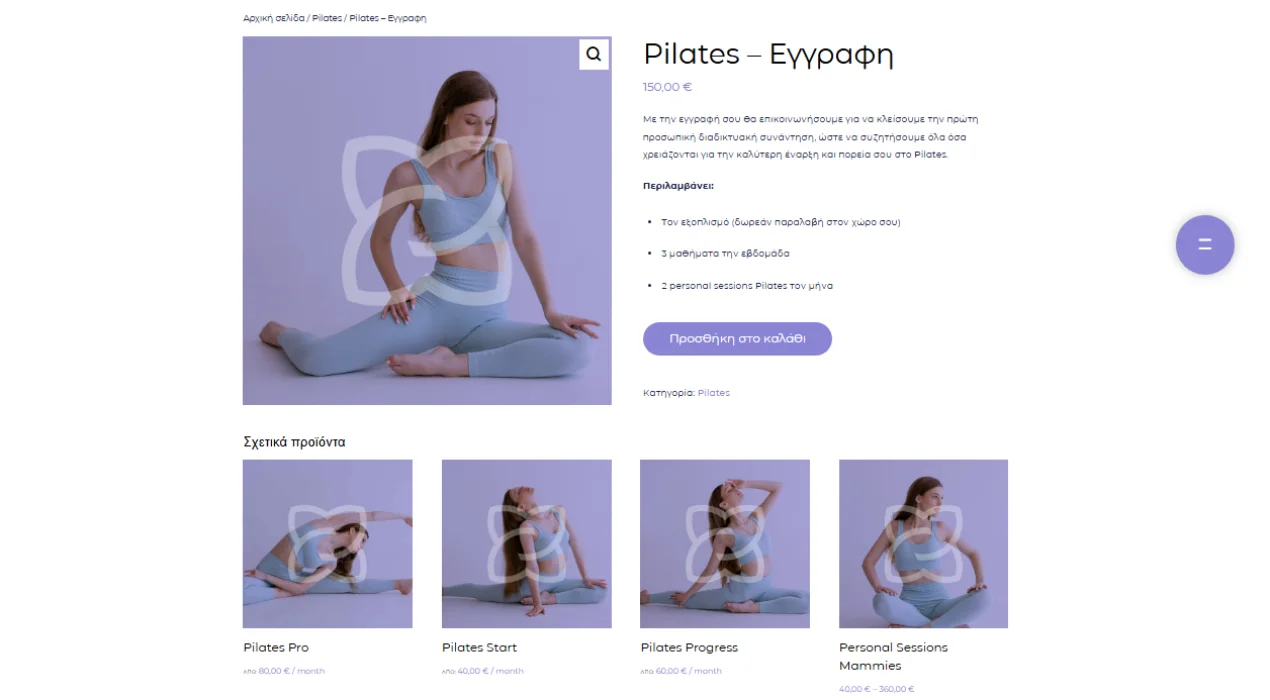
For ZenPower, we have developed the option of online private Yoga classes, allowing users to participate in personalized sessions without requiring physical presence at the studio.
7. How does visual content improve the presentation of treatments?
Certain medical and therapeutic services become much easier to understand when supported by appropriate visual content.
Photos, videos, exercise examples and presentations of the treatment process can help patients better understand what a service involves.
Visual material can also turn complex information into more accessible and understandable content.
In practice:
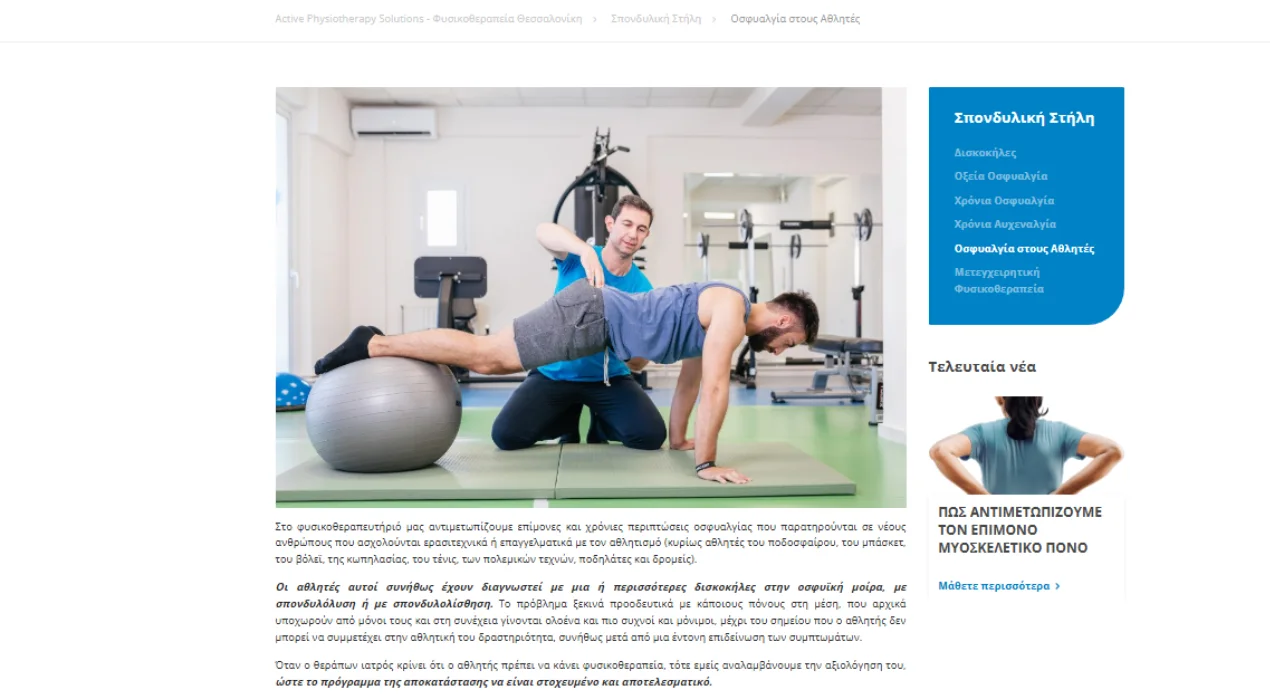
On activephysio.gr, we have used visual and informative material to better present physiotherapy, its techniques and the therapeutic approach, helping visitors gain a more complete understanding of the services.
8. How should location, opening hours and contact details be presented?
Practical information should be immediately accessible.
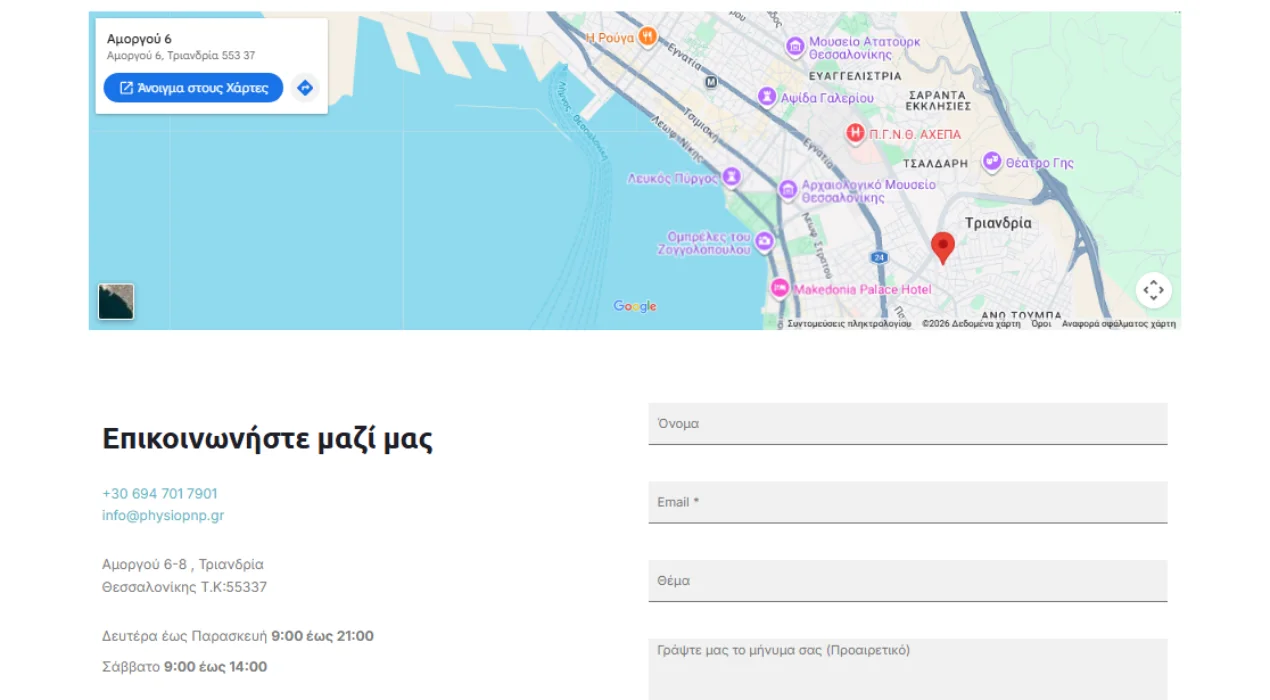
Address, telephone number, opening hours and contact methods should be presented clearly and without unnecessary steps.
A patient who has already decided to visit a doctor should not need to search different parts of the website for the information they need.
In practice:
For physiopnp.gr, we have organized the practice details and contact information so that visitors can easily find where the practice is located, how to get in touch and how to proceed to the next step.
9. How can a website build a specialized community?
A medical or scientific website can function not only as a source of information, but also as a space for building an active professional community.
This is particularly useful for educational projects, where the value does not end when a seminar is completed.
The opportunity for ongoing clinical discussion, exchange of experiences and access to additional knowledge can create a long-term relationship with participants.
In practice:
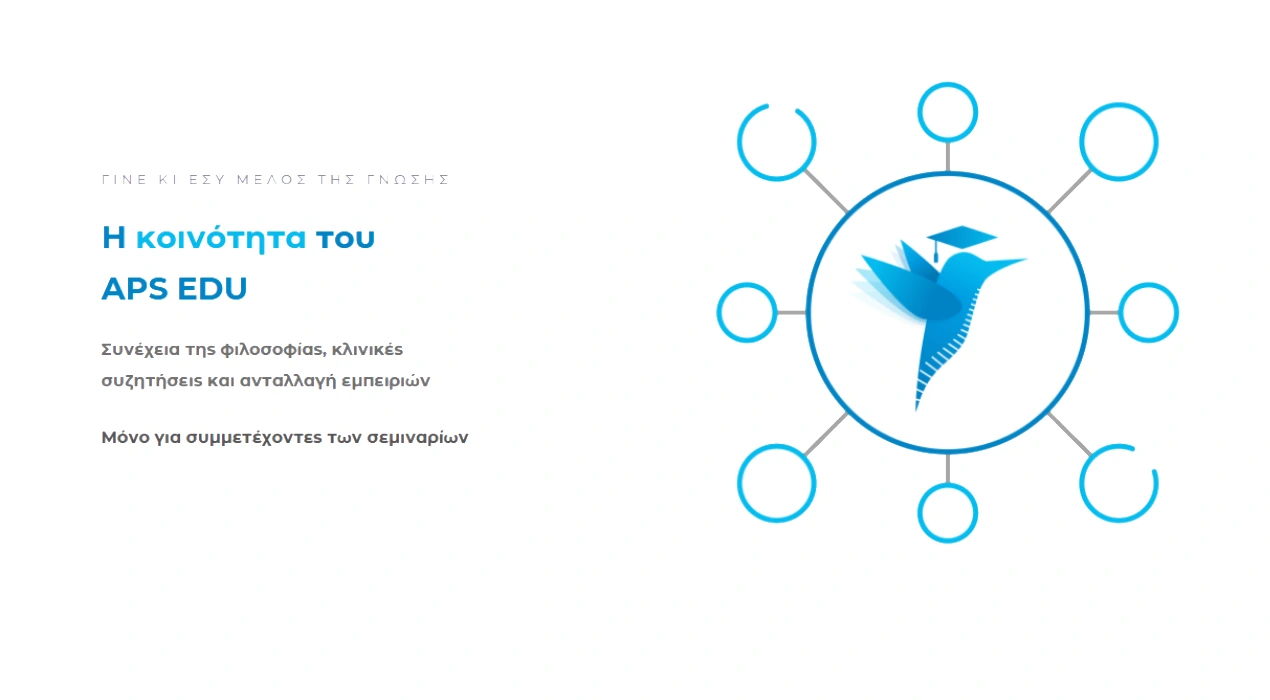
On activephysioedu.gr, we have created the APS EDU Community as an extension of the platform’s educational philosophy. Through it, clinical discussions and the exchange of experiences between professionals are supported.
Access to the community is available only to seminar participants,
adding further value to the educational experience even after each program has been completed.
10. Why are SEO and proper content structure important?
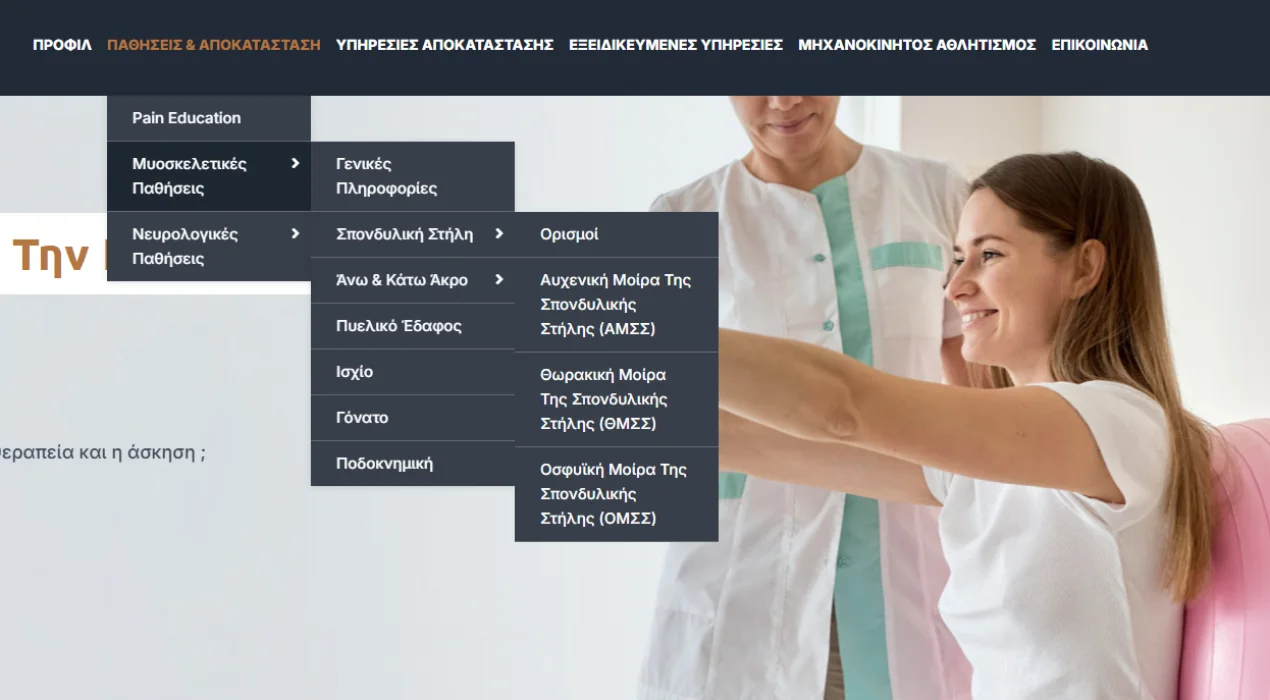
A properly organized medical website should be able to cover different services and search intents without creating confusion for visitors.
Dedicated service pages, appropriate internal linking and well-organized topics help both users and search engines better understand the professional’s field of expertise.
In practice:
On physiopnp.gr, we have organized the content around different services and therapeutic approaches, so that each important service has its own clear place within the website’s overall architecture.
The right features for every medical website
The important point is that not every medical website needs to have the same features.
The needs of an orthopaedic specialist are different from those of a psychologist, a physiotherapist or a professional offering educational programs.
For this reason, in the projects we develop, our goal is to select functions that provide genuine value to both the professional and their audience.
On one website, this may mean online booking. On another,
an organized FAQ, a comprehensive service library or online private classes. In an educational project, it may even mean creating a closed professional community that continues to provide value after a seminar has ended.
The right question, therefore, is not:
“How many features can we add?”
But:
“Which functions can truly help the professional and the person visiting the website?”
Medical websites we have created