Magento and Hyvä: one of the most powerful combinations in eCommerce
In 2026, it is no longer enough for an eShop to simply look good. It needs to be fast, easy to use on mobile devices, capable of supporting thousands of products, and able to evolve alongside the business.
Magento remains one of the most powerful eCommerce platforms for businesses that need flexibility, large product catalogs, custom functionality, ERP and CRM integrations, or the ability to expand into both B2B and B2C markets.
For several years, however, one of the areas that could make a Magento eShop more demanding was its frontend: the part of the store that visitors see and interact with every day.
This is where the Hyvä Theme comes in.
Hyvä was created to make the Magento frontend faster, lighter and simpler, without sacrificing the capabilities that make Magento such a powerful eCommerce platform. Today, Hyvä reports that its technology is used by more than 7,000 online stores, while its ecosystem includes hundreds of agencies and more than 1,600 compatible extensions.
Let’s take a closer look at why this combination is particularly relevant for an eShop in 2026.
1. A much faster frontend
Speed is one of the first things a customer notices when visiting an online store.
They do not need to know what Magento, JavaScript or server response time are. They simply notice whether a category page loads quickly, whether they can immediately view a product, and whether the shopping cart responds without delays.
Hyvä was created with exactly this philosophy in mind: to remove much of the complexity of the traditional Magento frontend and provide a significantly lighter environment.
According to its official figures, Hyvä reports up to 98% fewer page requests compared to Magento Luma and approximately 86% lower page weight in its comparison. Put simply, the visitor’s browser has far less data to download and process in order to display the page.
This does not mean that every Magento store using Hyvä automatically becomes fast. Hosting, images, extensions and the way the eShop has been developed still play an important role. Hyvä, however, provides a much stronger foundation for achieving high performance.
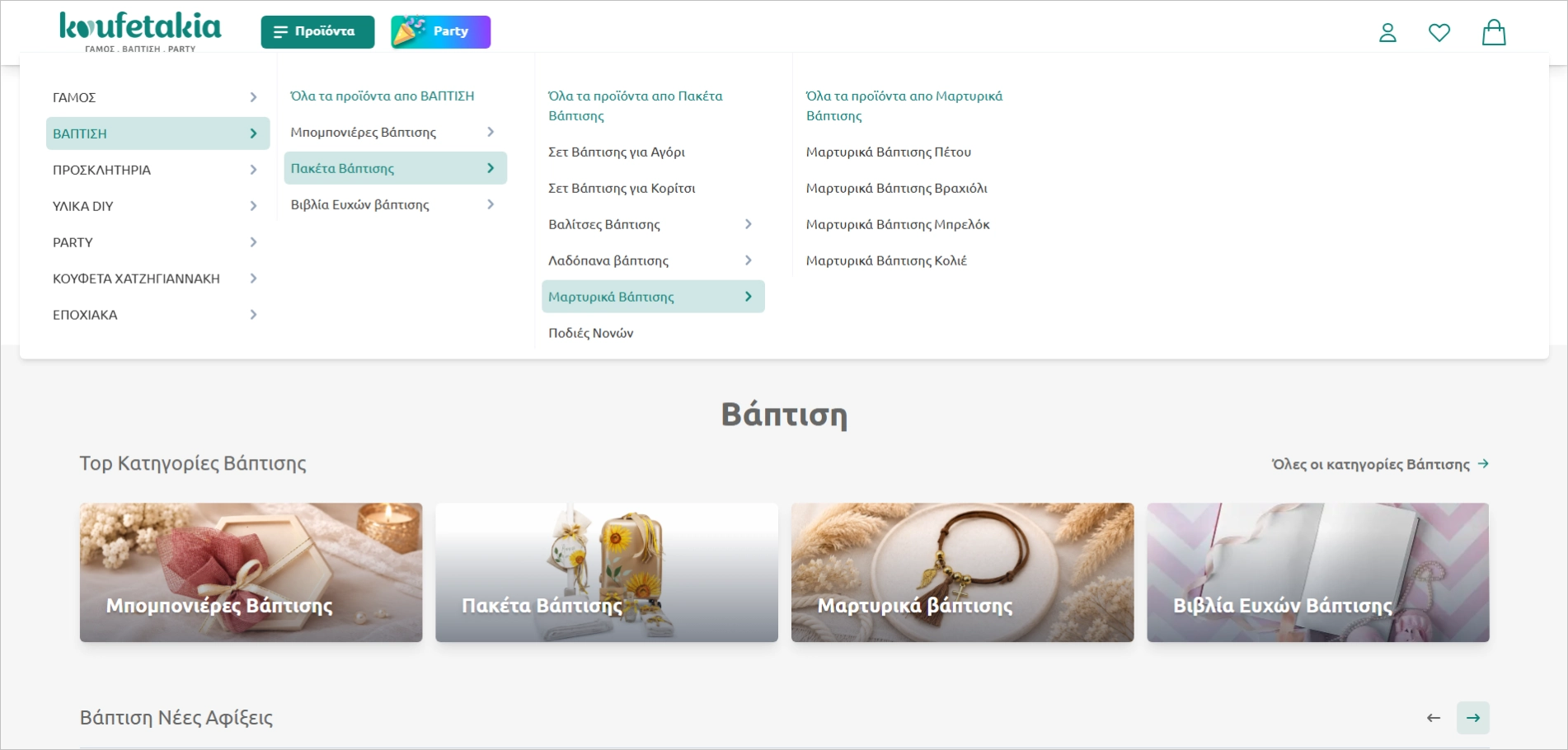
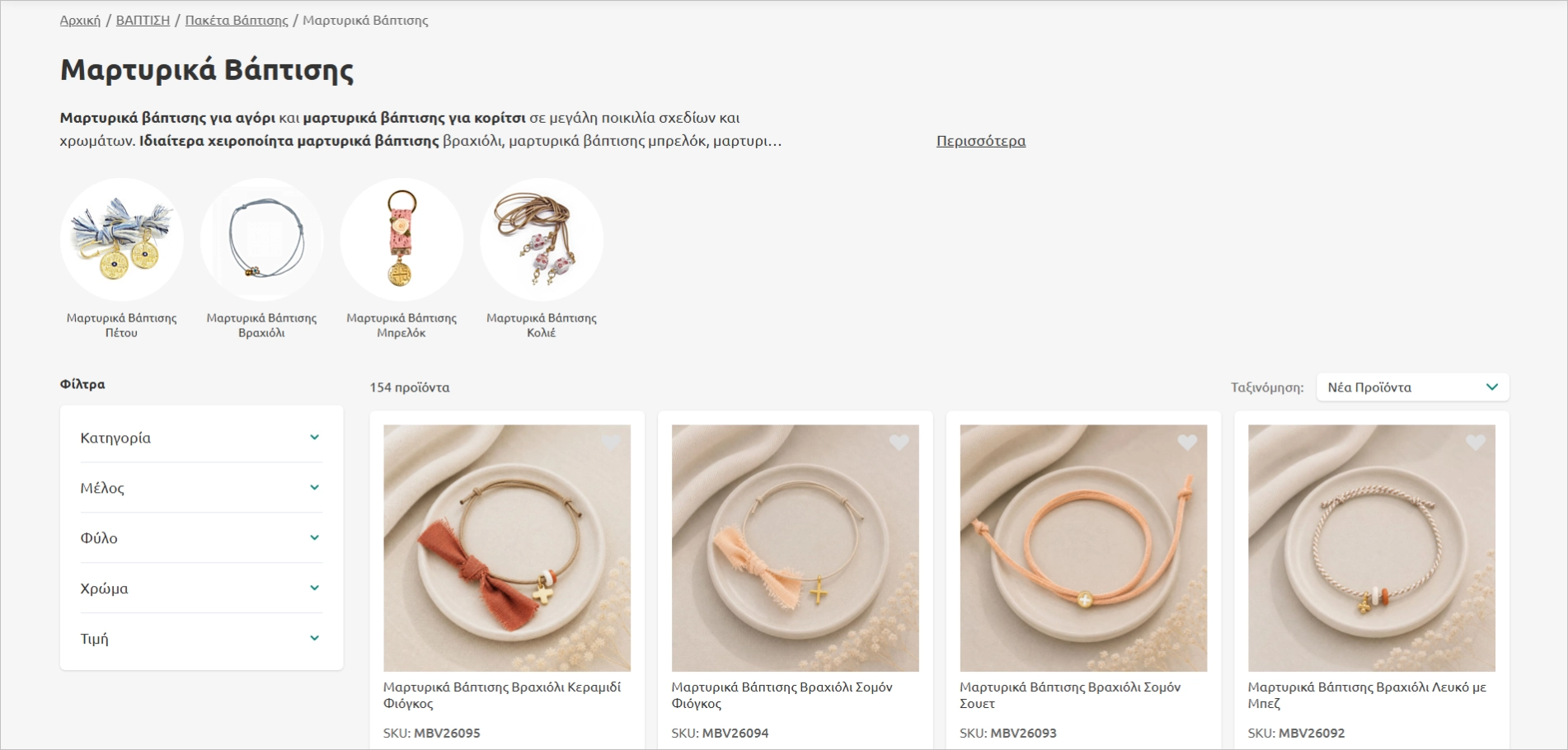
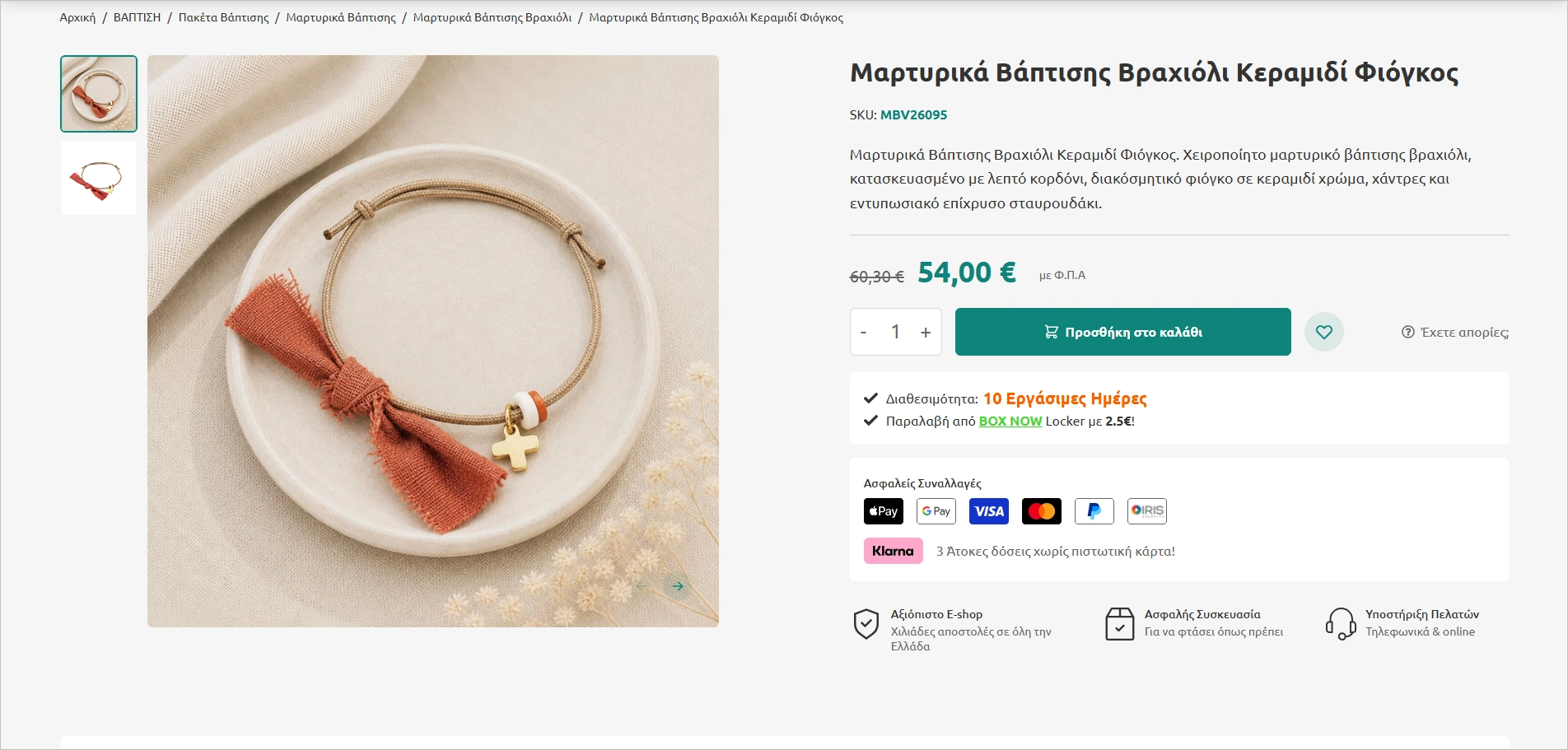
At Koufetakia.gr, a Magento eShop we developed using Hyvä, we applied exactly this philosophy so that an especially large catalog of products and categories could be presented through a modern and fast shopping experience.
2. A better user experience can lead to better conversion rates
In eCommerce, there are many small points throughout the customer journey where a sale can be lost.
A page takes too long to load. A filter is slow to respond. The user clicks on a product and has to wait. The shopping cart does not respond immediately. On mobile, completing an action requires more steps than it should.
Individually, these may seem like minor details. But when they occur throughout the purchasing journey, they create friction.
Hyvä has published several case studies in which migrating to Hyvä was associated with improvements in both speed and conversion rates. For example, an Audio-Technica project reported significant increases in page speed and conversion, while other implementations have shown similar improvements after migrating from older Magento frontends. These are results from specific projects and do not guarantee that every eShop will achieve the same percentages.
The key point is that the technology helps remove obstacles from the purchasing process.
The easier it is for someone to move from a category to a product, and from the product page to completing their purchase, the better the conditions are for conversion.
3. A better mobile experience
Most everyday internet browsing now takes place on smartphones. This is also where the differences between a heavy eShop and a properly optimized one become even more noticeable.
A mobile user may be browsing on a slower network, using a device with limited processing power, while still expecting the eShop to operate as smoothly as an app.
Hyvä’s lighter frontend means that the mobile device needs to process less code. When the overall implementation has been done correctly, the result is more responsive navigation, faster product pages and a smoother overall shopping experience.
This is also directly connected to Core Web Vitals, the metrics Google uses to evaluate important aspects of a website’s user experience. Hyvä itself has designed its frontend with a strong focus on achieving good Core Web Vitals.
For an eShop owner, this translates into something very simple: the customer should not have to think about the website’s speed. They should simply be able to find and buy what they are looking for.
4. More opportunities for SEO
The SEO performance of an online store does not depend only on keywords or category content.
The website’s technical quality, mobile experience and page performance are also important parts of the overall picture.
Hyvä connects its focus on Core Web Vitals with a better user experience and stronger conditions for an eShop’s organic search presence.
Of course, no theme alone can guarantee high rankings on Google. A proper SEO structure, content, categories, metadata, internal linking, structured data and an overall SEO strategy are still essential.
The advantage is that we start with a much stronger technical foundation.
Instead of trying to “fix” a heavy frontend later with dozens of individual optimizations, performance is already part of the core development philosophy.
5. Magento provides the backend power, Hyvä delivers a better frontend experience
This is perhaps the most important advantage of this particular combination.
Hyvä does not replace Magento.
Magento continues to manage the catalog, prices, products, attributes, orders, customers, promotions and integrations with third-party systems.
Hyvä primarily changes the way all of this is presented to the visitor.
This allows us to combine a particularly powerful eCommerce engine in the backend with a much more modern and lightweight frontend experience.
This is especially important for stores where products and catalogs are more complex.
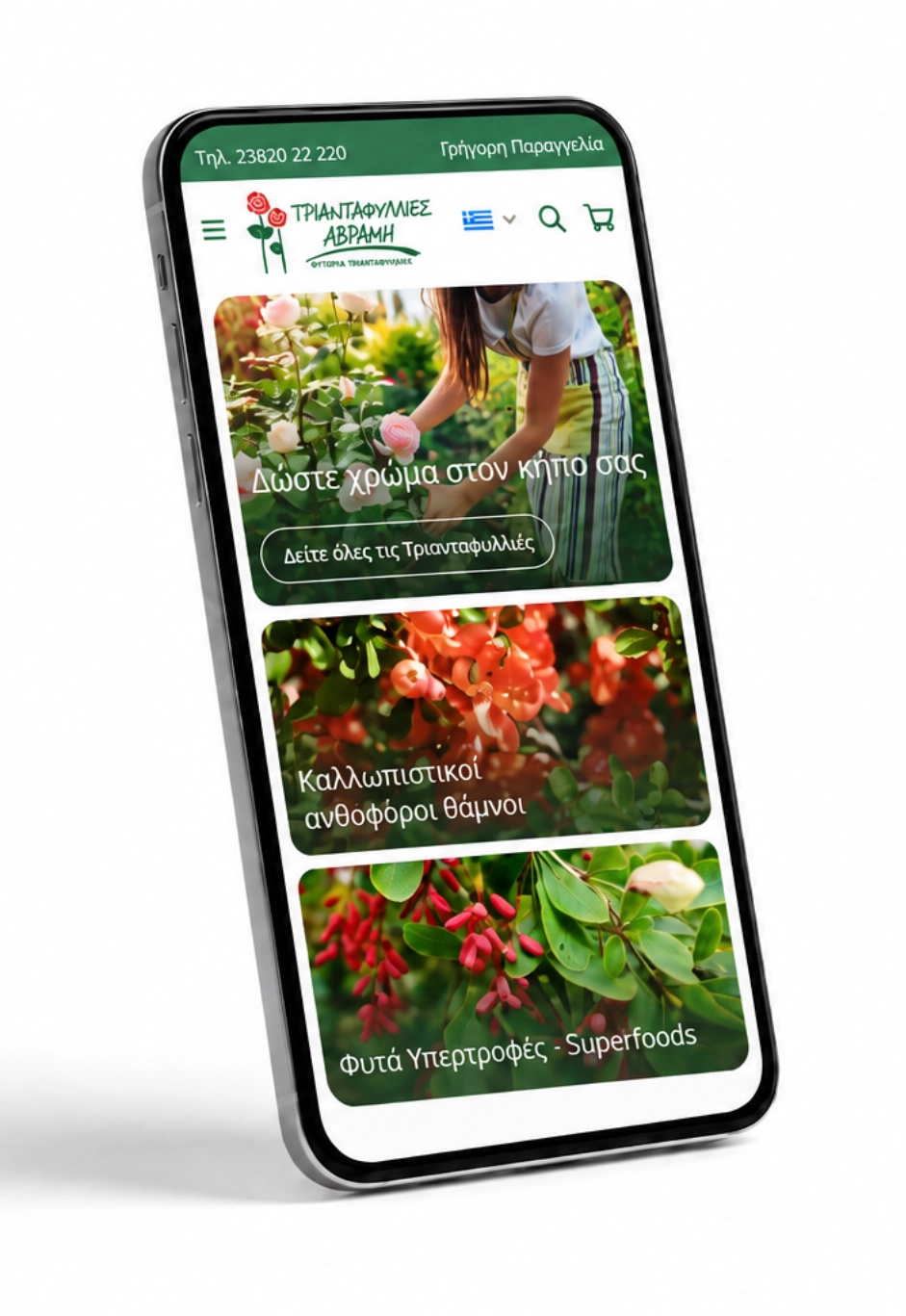
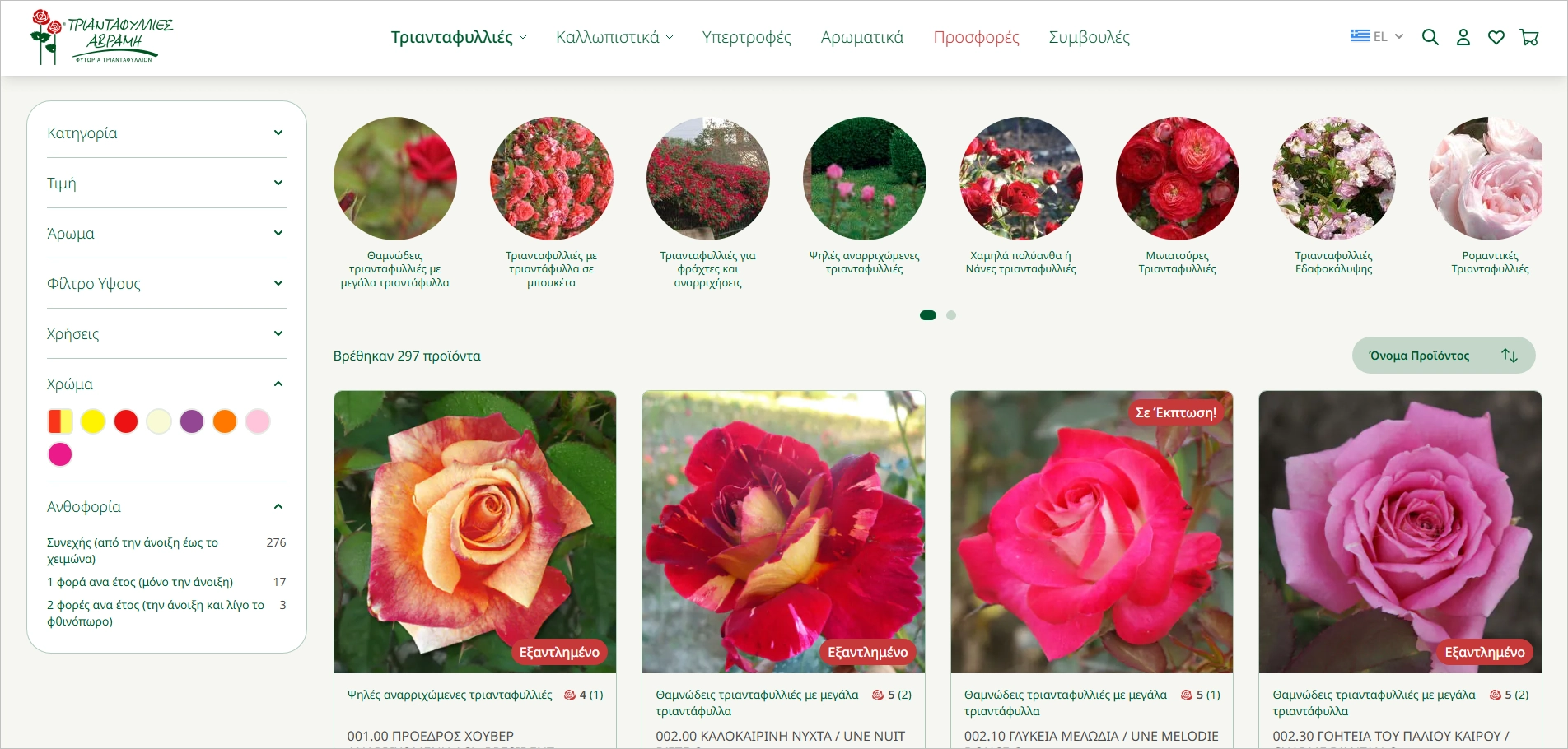
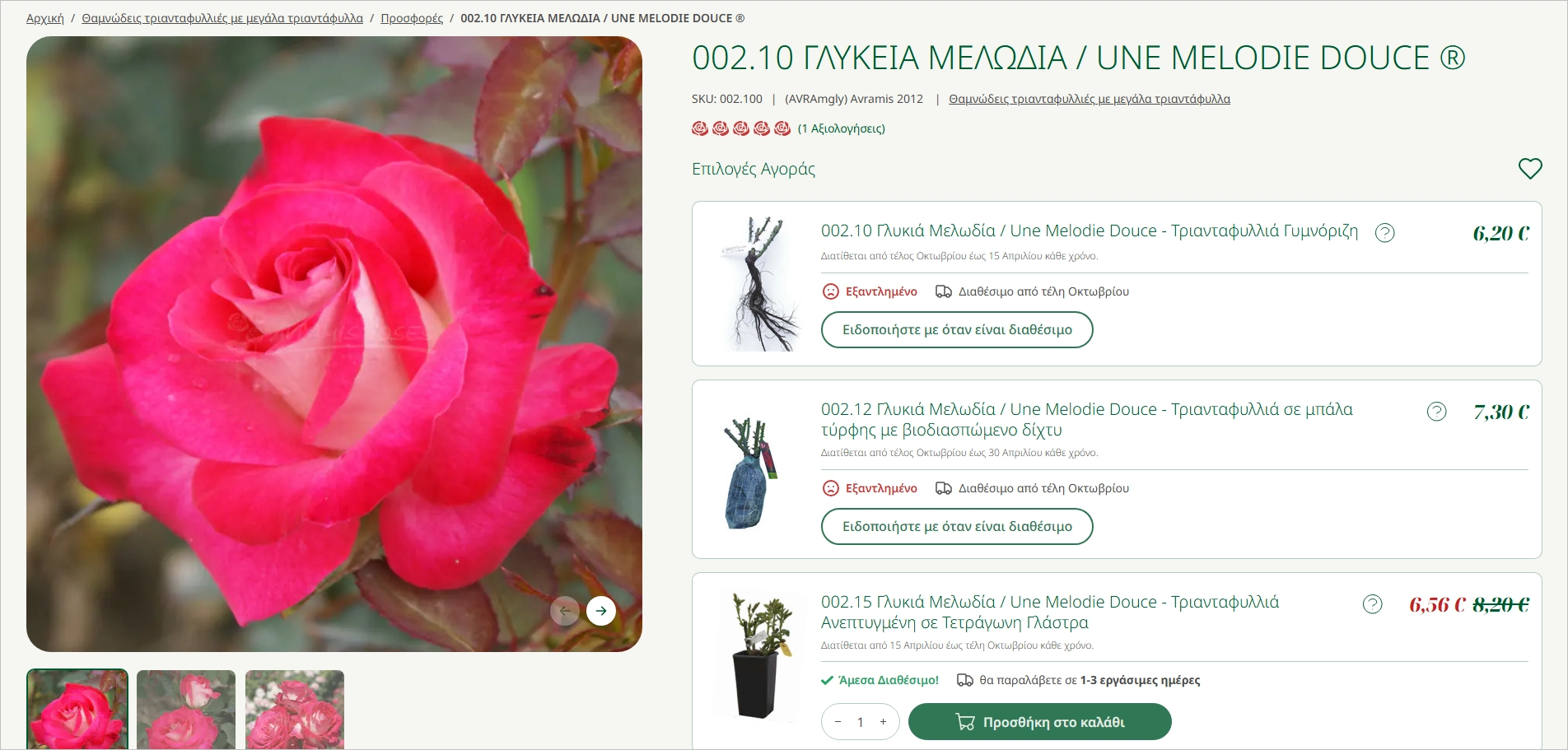
At Avramis.gr, another eShop we developed using this technological approach, users need to be able to navigate easily between different categories of plants, roses and related products, without the complexity of the catalog being transferred to the shopping experience. Avramis.gr is another representative example of how technology should remain “behind” the experience rather than making the customer journey more difficult.
6. Large catalogs without sacrificing the user experience
An eShop with 50 products has very different requirements from an eShop with thousands of SKUs, attributes, variations, categories and filters.
This is one of the areas where Magento remains particularly powerful.
It can be used for very large and complex catalogs while also integrating with ERP systems, warehouses, marketplaces, payment systems and various business applications.
Hyvä allows us to maintain this power without exposing the end user to the corresponding complexity.
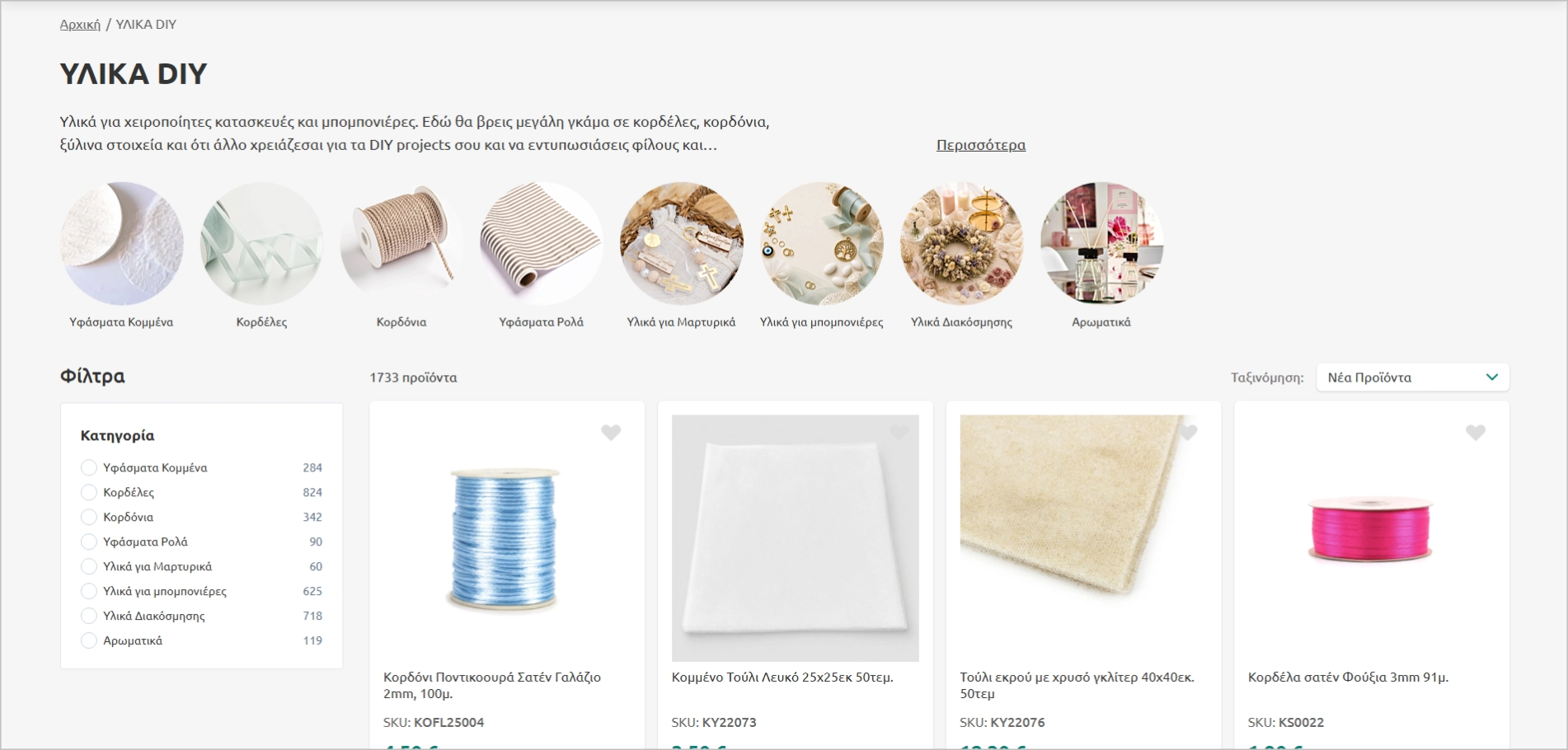
A representative example is Koufetakia.gr, which includes numerous main categories and subcategories for weddings, baptisms, invitations, DIY materials, party supplies and a large number of individual products.
In an eShop like this, the right technology is not a luxury. It is essential for allowing the store to grow without becoming increasingly difficult to use.
7. Cleaner technology makes future development easier
There is another advantage that customers may never see directly, but that businesses notice over time: maintenance.
A highly complex frontend requires more time for changes, fixes and new functionality.
Hyvä’s philosophy is to significantly reduce this complexity. The company reports that agencies using Hyvä have recorded 20% to 50% shorter development times compared with stores based on the default Magento 2 frontend.
This does not mean that every change automatically becomes easy or inexpensive.
It does mean, however, that we have a cleaner foundation to build on.
And that matters because a serious eShop does not stop evolving on the day it goes live. It continually requires new functionality, campaigns, landing pages, integrations and improvements.
8. You do not necessarily need the complexity of a Headless eShop
In recent years, Headless Commerce has been widely discussed as a solution for faster and more modern eShops.
For certain projects, a headless architecture can be an excellent choice. However, it is often accompanied by greater architectural and technical complexity.
Hyvä takes a different approach.
It has redesigned the Magento frontend to remain lightweight without requiring the development of an entirely separate application just to present the eShop. Hyvä itself positions this approach as a simpler alternative to many headless/PWA implementations.
For many businesses, this can provide the right balance: high performance without unnecessary technical complexity.
9. An ecosystem that has now matured
When a business invests in an eCommerce platform, it is not only interested in what the platform can do today.
It also needs to know whether support, developers and solutions will continue to be available in the years ahead.
According to Hyvä’s current figures, there are more than 6,500 live stores, 850+ agencies, 1,680+ extensions and more than 7,000 developers in its Slack community.
This means that we are no longer talking about experimental technology or a small Magento theme.
We are talking about a mature ecosystem that has established a significant presence in the global Magento market.
In addition, since November 2025, the core Hyvä Theme has become Open Source and free to use, while the company continues to offer separate commercial products such as Hyvä Checkout, Commerce and Enterprise.
Why Magento with Hyvä in 2026?
Because it combines two things that, until a few years ago, were more difficult to achieve at the same time.
On the one hand, the power and flexibility of Magento.
On the other, a frontend designed from the ground up around speed, mobile experience and lower complexity.
This does not mean it is the right solution for every online store. A very small eShop with limited requirements may be adequately served by a simpler platform.
However, when a business takes eCommerce seriously, has a large catalog, requires custom functionality, ERP integrations, or wants an infrastructure capable of supporting its growth, then Magento with Hyvä Theme is one of the most comprehensive options for 2026.
And for us, this is not simply a technology we know in theory.
It is a solution we have already selected and implemented in real Greek eCommerce projects such as Koufetakia.gr and Avramis.gr, adapting Magento each time to the actual needs of the business and its customers.
Frequently Asked Questions about Magento and Hyvä Theme
What is the Hyvä Theme?
Hyvä is a modern frontend for Magento 2. Put simply, we retain all the power of Magento in the background while changing the way the customer-facing part of the eShop is built and operates.
Why is Hyvä faster?
Because it was designed from the ground up to use significantly less and simpler frontend code compared with the traditional Magento Luma frontend. Hyvä reports 98% fewer page requests and 86% lower page weight in its own comparison with Luma.
Is Hyvä good for SEO?
Hyvä provides a very strong technical foundation for SEO because it places particular emphasis on speed, mobile experience and Core Web Vitals. Final SEO performance naturally also depends on the content, the structure of the eShop and the overall SEO strategy.
Is Hyvä suitable for a large eShop?
Yes. One of its key advantages is that Hyvä runs on top of Magento, meaning it can take advantage of the platform’s capabilities for large catalogs, multiple categories, configurable products, integrations and custom functionality.
Can an existing Magento eShop migrate to Hyvä?
Yes. The frontend can be migrated to Hyvä without necessarily replacing the entire eCommerce platform. Before such a migration, a technical audit of the existing store’s extensions and custom functionality is required.
Do all Magento extensions work with Hyvä?
There is now a very large ecosystem of compatible extensions — Hyvä reports more than 1,680. Nevertheless, in an existing Magento project, the specific modules being used should always be reviewed before a migration.
Is the Hyvä Theme free?
Yes. Since November 2025, the core Hyvä Theme has been Open Source and can be used free of charge. Additional solutions within the ecosystem, such as Hyvä Checkout, Hyvä Commerce and Hyvä Enterprise, are available separately.
Does Hyvä increase sales?
No theme can guarantee more sales on its own. However, a faster eShop, a better mobile experience and less friction during the purchasing process can create better conditions for conversion. Hyvä presents several case studies in which merchants recorded improvements in performance and conversion following similar implementations.
Have you developed Magento eShops with Hyvä in Greece?
Yes. Examples include Koufetakia.gr, where “Magento Hyvä by Artabout.gr” is also displayed publicly, as well as Avramis.gr — two eCommerce projects with different requirements and large product catalogs.